The first clip I researched was how to add credits/titles. The first thing I learnt whilst watching this clip is what the three different types of titles were ranging from default still, default roll and default crawl. After giving definitions of them all it helped me decide which one I wanted to choose when editing my film. After this I then learnt how to change the font, size and spacing of the title to make your movie more appealing and appropriate for your type of genre. Here I would use the font I have chosen which is Felix Titling as our group found that is was most successful with the genre horror. Further on in this clip he continues about the text of the title, I learnt how to place this title onto your chosen background getting the final look of our title.
The second clip I looked at was how to add transitions, I decided to look at this clip because I wanted to get a better insight into how to make my movie seamlessly cut from one scene to another; the way I do this could help create tension and suspense which is the main aim until we reach the climax. I learnt about a variety of transitions such as: cross dissolve, center split, cube spin, flip over and many more. After this I then learnt how to apply this by taking your clips and trimming off each one allowing the transition to be smoothly cut. The next step would be to pick your chosen transition and place it in the center where these two clips meet, then adjusting the transitions lengths to suit your film and that is the final of how to add transitions successfully.
Showing posts with label Research. Show all posts
Showing posts with label Research. Show all posts
Tuesday, 27 January 2015
Online tutorials for Adobe
For our film I decided to research online tutorials which helps you to understand how to add different effects and slides to your movie. By doing this it helps make your movie look more advanced and will help me achieve a higher grade.

Monday, 12 January 2015
Location Research

 create everything to be more spooky as the audience do not know what is about to happen around each corner as the camera tracks the breathless victim running for her life.
Here is the second pathway that we chose to film on, this is connected to the image above however leads to a main road which could give the audience hope that there is a chance of survival. In the filming we plan to have the scene where she is so close to safety but he finally grabs her. However, this leads to a bit of action where the victim then escapes again creating a roller coaster of emotions for the audience and with the up beat music help creating extreme amounts of suspension and adds enigmas. Will she escape?
Props: The Villain
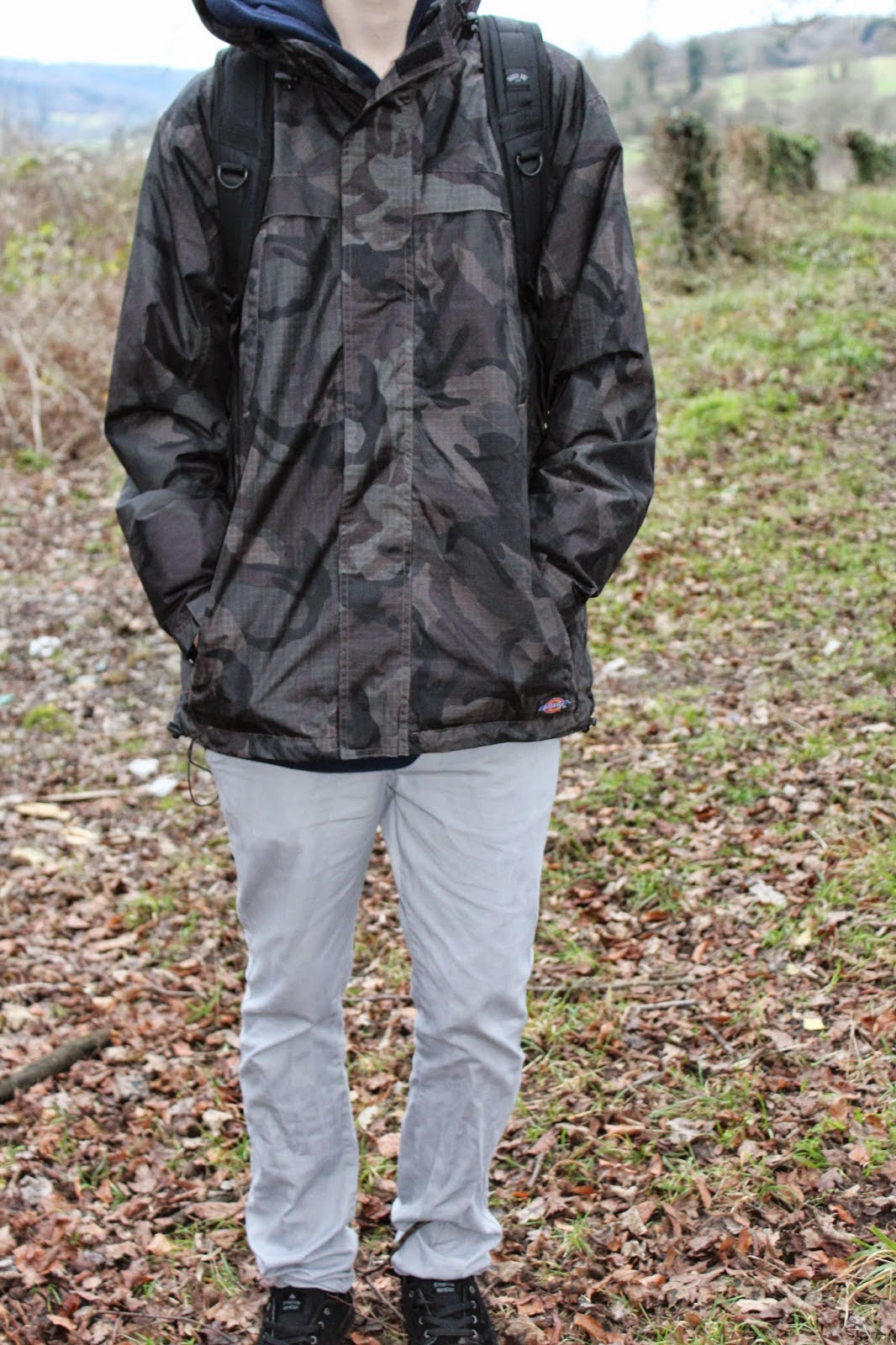
As you can see this is the antagonist, he is wearing simple and dark clothing with his hood up covering his face, making him look creepy but not too suspicious making the audience begin to think instead of predicting the whole trailer before any action was introduced. His hands being placed in his coat is effective as it doesn't give away any type of identity being mysterious. The dark clothing gives a more negative atmosphere as overall makes the antagonist look dark and gloomy. The bag then could add suspense when the audience is watching as they could use their imagination to image what could possibly be in this antagonists bag.

Props: The Victim


Wednesday, 26 November 2014
Soundtrack Research
For our film I decided to research some soundtracks to help me decide what kind of music would be best. I was looking for an intense soundtrack that reached a climax by going from slow to fast and quiet to loud. Once the climax was reached it would then go quiet until it was completely silent. Researching soundtracks also inspires me to what type of instruments would be most suitable for our film.
The first soundtrack I researched was Saw. I found Saw had many qualities that I was looking for in my film such as it having an inviting opening piece that draws you in straight away; it creates an eerie atmosphere and makes you feel uneasy like something is about to happen. As it carries on you get beats added, this is effective as it gives a rhythm to the soundtrack and gets the audience on the edge of their seat. Suddenly it goes quiet for a split second, tension builds up for the audience just until the beat drops. The music appears to be louder and faster which for us could represent this is when something bad happens. It contains fast beats which is suitable for our film as they could be added with the fast shots to help create the mood and have more suspense. The music then goes silent again and drifts off suggesting that the bad thing is over, this is where we would stop it. I like this soundtrack as it creates not only an eerie atmosphere but a mysterious effect which as a group is what we are looking for.
The second soundtrack I researched was The Conjuring. I didn't find this soundtrack as inviting as Saw or as suitable for my film. This is because I thought it struggled to build tension for the audience as the beginning gave off more of a shadow atmosphere that led to no big build that gets the audience on the edge of their seat. It was slow throughout which is not suitable for our film as we wanted a fast piece of music to represent the chase. In the middle the piece did get louder but didn't give off the atmosphere we were looking for. This piece was more creepy and represented possession as the Saw soundtrack could connote a chase leading to a death. However, the loud music in the middle attracted me as it drifted off into silence which is what we wanted. This is helpful as it will help us to incorporate bits of each piece to give off the perfect effect to the audience and fit our piece perfectly.
/http://incompetech.com/music/royalty-free/index.html?feels%5B%5D=Dark&feels%5B%5D=Eerie&feels%5B%5D=Mysterious&feels%5B%5D=Suspenseful&feels%5B%5D=Unnerving
Our group then researched a variety of non copy right music to get an insight into what would fit our piece. We came across a useful website that let us select what type of genre we wanted which was horror. We then got asked what type of feel we wanted and we chose: Dark, Eerie, Unnerving, Mysterious and Suspenseful. After searching many soundtracks we came across one which appeal to us the most called 'Evening of Chaos'. The description of this piece included 'A semi-beautiful and flawed piano melody, which contrasts with industrial percussion. This piece has three distinct movements'. We found that this would fit perfectly as in our film we have 3 main pieces and the music fits perfectly. It starts off with a subtle and uneasing type of music that is very welcoming but creepy and eerie at the same time. As the audience are then drawn in slashes are added and the music starts to speed up creating tension for the audience. Bangs are then added to create a beat and rhythm which is extremely effective. A note is held in the background to build suspense. The fastness of the music draws the audience in even more until it goes silent building extreme amount of tension.The upbeat music could represent our chase as it has a lot of tension and will engage the audience. The music carries on getting faster and faster until it reaches the climax where we would we stop it giving the audience that relief and satisfation.
/http://incompetech.com/music/royalty-free/index.html?feels%5B%5D=Dark&feels%5B%5D=Eerie&feels%5B%5D=Mysterious&feels%5B%5D=Suspenseful&feels%5B%5D=Unnerving
Our group then researched a variety of non copy right music to get an insight into what would fit our piece. We came across a useful website that let us select what type of genre we wanted which was horror. We then got asked what type of feel we wanted and we chose: Dark, Eerie, Unnerving, Mysterious and Suspenseful. After searching many soundtracks we came across one which appeal to us the most called 'Evening of Chaos'. The description of this piece included 'A semi-beautiful and flawed piano melody, which contrasts with industrial percussion. This piece has three distinct movements'. We found that this would fit perfectly as in our film we have 3 main pieces and the music fits perfectly. It starts off with a subtle and uneasing type of music that is very welcoming but creepy and eerie at the same time. As the audience are then drawn in slashes are added and the music starts to speed up creating tension for the audience. Bangs are then added to create a beat and rhythm which is extremely effective. A note is held in the background to build suspense. The fastness of the music draws the audience in even more until it goes silent building extreme amount of tension.The upbeat music could represent our chase as it has a lot of tension and will engage the audience. The music carries on getting faster and faster until it reaches the climax where we would we stop it giving the audience that relief and satisfation.
Tuesday, 25 November 2014
Certificate Research U

Certificate Research PG

Certificate Research 12 and 12A


The 12A requires an adult to accompany any child under 12 seeing a 12A film at the cinema but when you are 12 you do not need to be accompanied and can go with friends, making the film more popular with a bigger audience. Strong language such as the f*** may be passed or changed to a 15 certificate but more moderate language such as b*** are more likely to be passed for 12 and 12A
At 12A, moderate violence is allowed but it should not contain a lot of detail meaning there should be no emphasis on injuries or blood. In 12A and 12 there may be sight of drugs but the scene or film should not concentrate around this area.

Certificate Research 18

Friday, 21 November 2014
Certificate Research 15
Chosen Certificate

Tuesday, 18 November 2014
Film Institution: The Major Movie Studios
Columbia Pictures:
Columbia Pictures was made in 1919 and is under the operation of Sony Pictures. It has a very recognisable label and this represents their success in the movie business. It is one of the leading film studios in the world and has made films such as ‘Cloudy with a Chance of Meatballs 2’, ‘Skyfall’ and ‘22 Jump Street’ which have a varied range of audiences but are all exceptionally popular.

Paramount:
Paramount was founded 1912 as Famous Players Film Company then officially became Paramount pictures in 1914. They are known as one of the big six and are successful because of their high budget films such as ‘India Jones’, ‘Shrek’, ‘Friday 13th and ‘Paranormal Activity’. They have made a wide range of genre and their horror films were hugely successful which makes it more suitable for our trailer as our chosen genre is horror.

Warner Bros:
Warner Bros studios was found in 1903 by the four Warner brothers. It is American producer of film, television, and music entertainment. As well as this, they also famously started the original ‘Looney Tunes’, as well as many more successful cartoons. Warner bros is extremely successful as it owns half of the CW Television Network and has made some of the most popular films invented such as Harry Potter.

Walt Disney:
Walt Disney Pictures is one of the most well-known film institution out of all the major movie studios. It was found in 1923 and was immediately extremely popular. Disney is constantly apart of life as played a massive part in childhood. We also know the studio because of the famous founder - Walt Disney. Disney traditionally specialises in family movies and animation such as the classics, 'Sleeping Beauty' and 'The Jungle Book' to the more recent 'Cars', 'Wreck-it Ralph' and 'Up'. They also own a wide amount of film institutions such as Touchstone Pictures and Pixar. This all helps them stay successful and constantly make profits.

Universal Pictures:
Universal Pictures was founded in 1912 and It is the world's third oldest major film studio. It had many successes as it made ‘Jaws’, ‘Jurassic Park’ and ‘The Extra-Terrestrial’ which each became the highest-grossing film ever at the time of its initial release.

20th Century Fox:
20th Century Fox, founded in 1935, have one of the most recognisable logos and theme tunes in the industry, the studio used to be a subsidiary of News Corporation, but now it is currently a subsidiary of 21st Century Fox. It is tremendously successfamazing films that ul as and It is the world's second largest major film studio, after Warner Bros. It has made will never be forgotten such as ‘Avatar’, ‘Star Wars’, ‘Night at the Museum’ and many more.

Columbia Pictures was made in 1919 and is under the operation of Sony Pictures. It has a very recognisable label and this represents their success in the movie business. It is one of the leading film studios in the world and has made films such as ‘Cloudy with a Chance of Meatballs 2’, ‘Skyfall’ and ‘22 Jump Street’ which have a varied range of audiences but are all exceptionally popular.
Paramount:
Paramount was founded 1912 as Famous Players Film Company then officially became Paramount pictures in 1914. They are known as one of the big six and are successful because of their high budget films such as ‘India Jones’, ‘Shrek’, ‘Friday 13th and ‘Paranormal Activity’. They have made a wide range of genre and their horror films were hugely successful which makes it more suitable for our trailer as our chosen genre is horror.
Warner Bros:
Warner Bros studios was found in 1903 by the four Warner brothers. It is American producer of film, television, and music entertainment. As well as this, they also famously started the original ‘Looney Tunes’, as well as many more successful cartoons. Warner bros is extremely successful as it owns half of the CW Television Network and has made some of the most popular films invented such as Harry Potter.
Walt Disney:
Walt Disney Pictures is one of the most well-known film institution out of all the major movie studios. It was found in 1923 and was immediately extremely popular. Disney is constantly apart of life as played a massive part in childhood. We also know the studio because of the famous founder - Walt Disney. Disney traditionally specialises in family movies and animation such as the classics, 'Sleeping Beauty' and 'The Jungle Book' to the more recent 'Cars', 'Wreck-it Ralph' and 'Up'. They also own a wide amount of film institutions such as Touchstone Pictures and Pixar. This all helps them stay successful and constantly make profits.
Universal Pictures:
Universal Pictures was founded in 1912 and It is the world's third oldest major film studio. It had many successes as it made ‘Jaws’, ‘Jurassic Park’ and ‘The Extra-Terrestrial’ which each became the highest-grossing film ever at the time of its initial release.
20th Century Fox:
20th Century Fox, founded in 1935, have one of the most recognisable logos and theme tunes in the industry, the studio used to be a subsidiary of News Corporation, but now it is currently a subsidiary of 21st Century Fox. It is tremendously successfamazing films that ul as and It is the world's second largest major film studio, after Warner Bros. It has made will never be forgotten such as ‘Avatar’, ‘Star Wars’, ‘Night at the Museum’ and many more.
Film Institution: The Mini Major Movie Studios
Dreamworks Animation:
Found in 1994 Dreamworks has always been popular with the younger audiences and family types meaning ratings are mostly ‘PG’ or ‘U’. For example they include ‘How To Train Your Dragon’. They are probably the most famous Mini Major Movie studio with a highly recognisable logo.

Metro-Goldwyn-Mayer:
Founded in 1924, it became a success and well-known until an increasingly unprofitable MGM was bought by Kirk Kerkorian, who lowered staff and production costs, forced the studio to produce low-budget fare, and then shut down theatrical distribution in 1973.The studio continued to produce five to six films a year and some popular films were made out of it such as ‘Nanny McPhee’.

Lionsgate Entertainment:
Lionsgate was founded in 1997 and is commercially the most successful Mini Major Film and television distribution company in North America and the seventh most profitable movie studio. They are well-known for horror movies such as ‘Saw’ and ‘The Hunger Games’.

The Weinstein Company:
The Weinstein Company are a recent company, only formed in 2005. Weinstein films include 'The King's Speech' and 'The Iron Lady' which are already known to be a big successful bringing it profits. As more films are released the more popular it will become.

Relativity Media:
Relativity Media was founded in 2004 and is not quite low-key being one of the least famous Mini Major Film studios but is still growing. They have a lot more growing to do, and they have not made many films that have received great profit of publicity. Their films include: 'Bridesmaids' and 'Limitless'.

Found in 1994 Dreamworks has always been popular with the younger audiences and family types meaning ratings are mostly ‘PG’ or ‘U’. For example they include ‘How To Train Your Dragon’. They are probably the most famous Mini Major Movie studio with a highly recognisable logo.
Metro-Goldwyn-Mayer:
Founded in 1924, it became a success and well-known until an increasingly unprofitable MGM was bought by Kirk Kerkorian, who lowered staff and production costs, forced the studio to produce low-budget fare, and then shut down theatrical distribution in 1973.The studio continued to produce five to six films a year and some popular films were made out of it such as ‘Nanny McPhee’.
Lionsgate Entertainment:
Lionsgate was founded in 1997 and is commercially the most successful Mini Major Film and television distribution company in North America and the seventh most profitable movie studio. They are well-known for horror movies such as ‘Saw’ and ‘The Hunger Games’.
The Weinstein Company:
The Weinstein Company are a recent company, only formed in 2005. Weinstein films include 'The King's Speech' and 'The Iron Lady' which are already known to be a big successful bringing it profits. As more films are released the more popular it will become.
Relativity Media:
Relativity Media was founded in 2004 and is not quite low-key being one of the least famous Mini Major Film studios but is still growing. They have a lot more growing to do, and they have not made many films that have received great profit of publicity. Their films include: 'Bridesmaids' and 'Limitless'.
Target Audience
Chosen Genre
From our research, we also were able to establish that these types of genres were slightly more popular with males. The viewers of The Purge: Anarchy were 55% male and 45% female, not as big of a difference as we expected, despite this, 75% of A Night In The Woods viewers were male and 25% were female. This has taught us that in some cases we need to balance out all different themes of horror to attract both genders. Despite horror stereo-typically being a male dominated genre, it is easy to attract female viewers through the use of famous, attractive male actors.
Even though we are only researching the ages and genders of the films viewers, the Pearl & Dean website have also given us the most popular classes in the social structure to have watched the films. From this research, we have found that the most common class to watch A Night In The Woods was the lower-middle class, this was also the same for The Purge: Anarchy. The type of social class can be affected by both special effects and certain actors
Thursday, 6 November 2014
Rules Of Filming
The 180 rule is a basic rule that means that two characters should always have the same left and right relationship to each other.
Shot reverse shot is when one character is shown looking (often off-screen) at another character, and then the other character is shown looking "back" at the first character. Since the characters are shown facing in opposite directions, the viewer assumes that they are looking at each other.
The 30 degree rule states the camera should move at least 30 degrees between shots of the same subject occurring. If this rule isn't followed a jump cut occurs and there is a risk that the audience starts focusing on the filming technique instead of the story that is being narrated.
Match on action is where the editor cuts from one shot to another view that matches the first shot's action.
Rule of thirds is where the frame is divided into nine imaginary sections.
Subscribe to:
Posts (Atom)